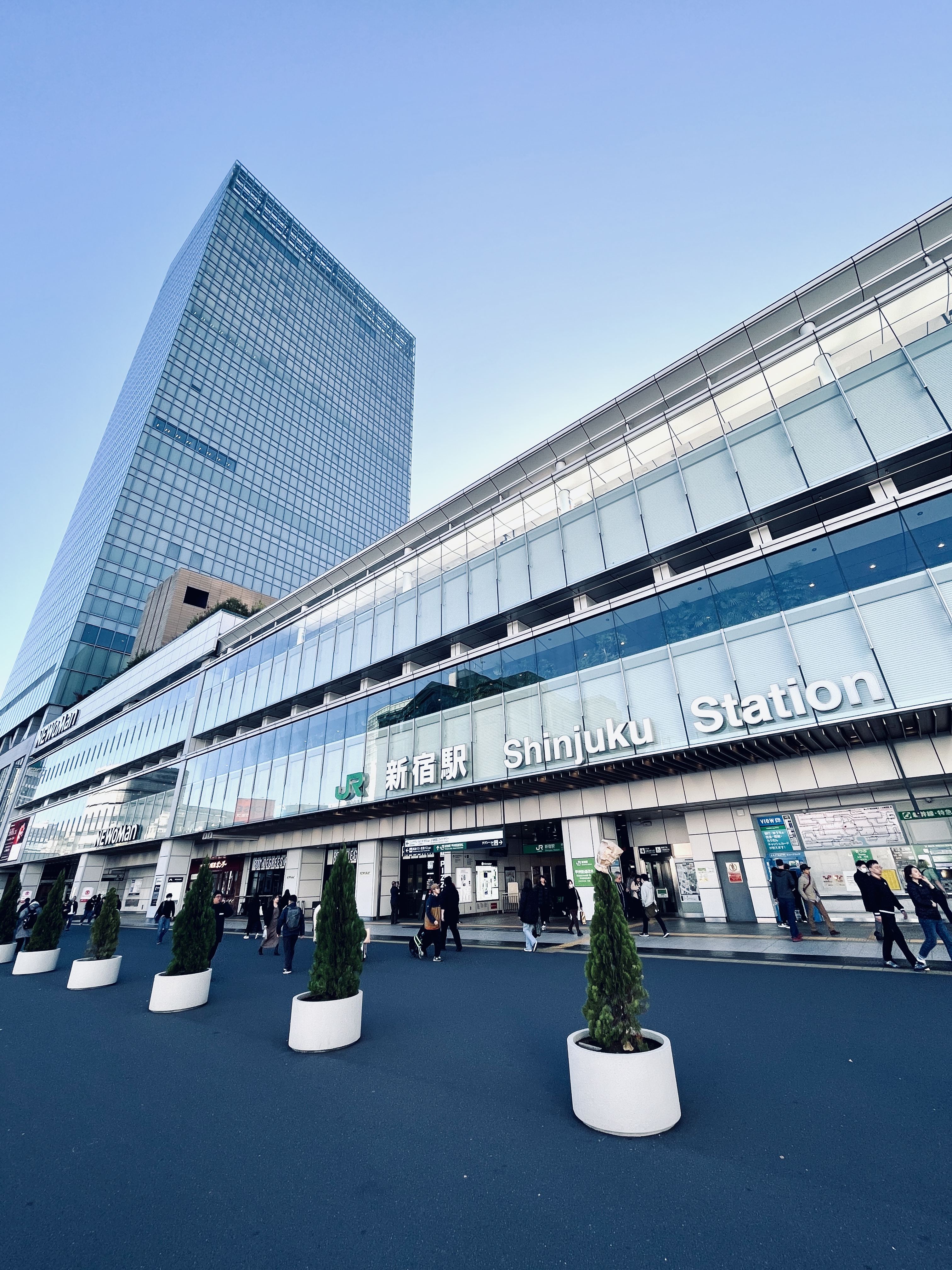
Shinjuku, meaning “new lodge” in Japanese, is the beating heart of Tokyo. Since this is a district that overwhelms, perhaps getting a sense of the orientation helps. At the centre of the beating heart is Shinjuku Station – the busiest in the world – pumping out 3.6 million passengers daily through its gates, making it hard not to get lost in the subterranean labyrinth of tunnels, shops and exits. The station is currently undergoing major refurbishment, and it has a whopping 35 platforms served by 12 major lines, not counting the Tokyo metro. Step out to gaze at skyscrapers surrounding the main station, offering all manner of shopping, entertainment and F&B choices.

Towards the north is the artery of excitement and sin: Kabukicho is Tokyo’s red-light district, full of bars and “girlie” shows, bright neon lights and noisy pachinko parlours. While the shopping malls such as the new Kabukicho Tower heave with customers throughout the day, this area really comes alive at night, and stays busy until the early hours of dawn. A gander here invigorates the senses as your heart dances to the pulse of the streets.
At the eastern end, Shinjuku Gyoen overwhelms in a different way, by offering a terrifically scenic park setting in the middle of the city. During the sakura season, trees lining the park bloom with cherry blossoms, while approaching winter, roses and other floral species steal the show at the rose beds.
Shinjuku’s west side is its formal quarters; skyscraper city awash with architecturally bland corporate and governmental office buildings, although newer models like the Mode Gakuen “Cocoon” Tower stands out. A highlight here is the Tokyo Metropolitan Government Building which has observatories on both the North and South Towers at the 45th floor.
Our hotel, JR Kyushu Hotel Blossom Shinjuku, is a 5 minute walk from the main Shinjuku Station entrance. With a swanky lobby area, the rooms are slightly dated and smallish (typical of most rooms in Tokyo) but it is centrally located to most key points within the district.
We started by having breakfast at Sarabeth’s at Floor 2 of Lumine 2 in Shinjuku (9am – 10pm daily), with an escalator handily located for entrance from street level. Sarabeth’s, now open at four outlets in Japan, is known for their delicate but delicious western fare, and their French Toast are a speciality. They also do seasonal drinks such flowery tea.

Whilst within the shopping mall, check out the enormous food halls with colourful and intricately-designed boxes of sweets and snacks, arranged neatly behind glass counters, making them almost as pleasurable to see as it is to eat. Some products, such as chestnuts, strawberries, plums and cherry blossom, are seasonal. During our trip in December, the stores were big on selling strawberries, chestnuts and grapes. The bigger shopping centres such as Takashimaya, Isetan, Lumine and NEWoMan all have food halls usually located at the lower floors.

A good place to walk off all those calories is to visit Shinjuku Gyoen National Garden, a former imperial turned national garden which spans 144 acres in the middle of Shinjuku (open 9am to 4pm except Mondays, closes later in the summer). The nearest entrance from Shinjuku Station is Shinjuku Gate; buy a ticket at the automated kiosks. Entry is ¥500 for adults (free for children) but it is worthwhile considering the many attractions and amenities within the park.

The Shinjuku Gyoen was originally a part of the private residence of Lord Naito. Naito was a feudal lord, or “daimyo”, in the Edo period and a vassal to the first shogun, Leyasu Tokugawa. During the Meiji period, western influence was introduced to Japan, which led to rapid industrialisation and the simultaneous dismantling of old traditions and practices. It was under this backdrop that the park was transformed into an agricultural experimentation station, and then into an imperial garden in 1906. After Japan’s defeat in WWII, the park was opened to the public in 1949 as a national garden, and remains one of the most beautiful in all of Tokyo. It blends three different styles: Landscape, Formal and Traditional, and is considered to be one of the most important modern-western style gardens in the Meiji era.

The garden is big enough to warrant a full half-day of exploration and aimless wandering, with time for lunch and a drink. For those wanting to feel the sunshine on your face, the Landscape Garden is a good place to lie back for a quick snooze or watch the locals having a picnic. It is particularly spectacular during the Sakura season when cherry blossom tress are in full swing, or in deep winter when every inch is covered by a heavy blanket of snow.


Some of the other highlights include the Greenhouse, a climactic chamber for subtropical plants, and the Shinjuku Gyoen Museum, a modern wood-and-glass building which explains the history of the park through video animation. There are also interesting displays on the viewing parties held here during the chrysanthemum and cherry blossom seasons when the park was used an imperial garden.

Just beside is the Okido Rest House, which offers picturesque views of Tamamo Pond and the manicured lawns by the banks with trees in different shades of red, green and yellow. On the other side are the Formal Gardens, which houses the avenue of London Planes and the beautiful rose beds that bloom during the autumn to winter months. Towards the south are a series of ponds and even more landscaped gardens.

Feeling peckish after a stroll and a snooze? You’ll be glad to know that within the park are several restaurants, souvenir shops and teahouses, even a Starbucks! Buy a snack from one of the shops so that you can sit under the shade of a maidenhair tree and watch Tokyo pass by.
For something a bit more conventional, the Tempura Shinjuku Tsunahachi Souhonten restaurant (generally 11am – 830pm, closing hours vary) is just a short 7 minutes walk away from Shinjuku Gate.

This is an old school tempura restaurant founded in 1923 by Kyuzo Shimura that apparently boasts a long list of celebrity cliental due to its fresh ingredients and fragrant (sesame) cooking oil. As the restaurant has since expanded to the second floor, long queues move quickly. Grab some counter seats to get in on the preparation and frying action by the master chefs.

On its menu are set meals consisting of various seafood (usually prawn, squid and fish) and vegetable tempura dishes, complete with the usual accompaniments such as rice, miso soup and pickles. Prices range from ¥2,500 for a basic set and up to ¥10,000 for an Omakase meal. One can also order from the special menu, which changes according to the season.

For something sweet, wander a few blocks down to Shinjuku-Sanchome Station to try a snack that is a Japanese favourite at the popular Owake Dango. This dumpling, or dango, is made from mixing short-grain rice flour and glutinous rice flour, rolled into balls and stuck in twos or threes onto a stick. It has a soft and chewy texture and is traditionally covered with a soy sauce glaze, making it both sweet and savoury. Nowadays, shops sell dango with various toppings such as red bean, matcha and chestnut. Owake Dango also carries mochi and other types of sweets, and, if my powers of observation are anything to go by, the strawberry mochi is one of their bestsellers.


Other sights within the area include the Hanazono Shrine, a compact Edo era shine dedicated to Inari – the God of fertility and success – popular with businessmen seeking good fortune, and the Samurai Museum (temporarily closed since Covid). To fill your cultural side, there are some notable museums as well, such as the SOMPO Museum of Art, the Tokyo Toy Museum and Shinjuku History Museum. We haven’t had the chance to visit all these yet, but they will no doubt be high on our list of places to visit!
Not to be missed, Omoide Yokocho on the opposite side of the tracks retains the charms of old Tokyo. This enclave of narrow passageways, hanging lanterns and wooden buildings was once a thriving black market after WWII, but managed to escape both modern development in the 1960s and a ranging fire in 1999. Lined with tiny restaurants and bars catering to both locals and foreigners, menus can be found in English. Charcoal smoke and the aroma of burning meat greet you as meander your way through the crowds, which intensifies at dinner time. If you are feeling adventurous, step into a stall, grab a cold bottle of Asahi Super Dry and a few chicken skewers. Trying to engage the owner in Japanese or rubbing shoulders with fellow customers as you tuck into your dinner makes for a truly memorable experience.
For alternative choices for dinner, you’ll dine well at Fuunji or Udon Shin, both located close together, about a 10 minutes’ walk west of Shinjuku Station. Fuunji (daily 11am – 3pm, 5 – 9pm) is a small, counter-seat only ramen restaurant, known for its famous tsukemen ramen, that is, boiled noodles served with a separate dipping sauce. Fuunji’s tsukemen soup is concocted using chicken bones, iwashi (sardines) from the Seto Inland Sea, katsuobushi (bonito fish flakes) from Kouchi, and konbu (kelp). Fuunji also serves ramen, but the dipping sauce in the tsukemen is usually thicker.

Expect queues as it attracts both locals and the well-informed tourists. Queues form outside the shop and spill onto the opposite Yoyogi Aoi Park, however, these move fast as it’s a no-nonsense, eat-and-get-out kind of place. To order, select your choice of ramen at the vending machine, pay for it, pass your slip to the counter staff and wait your turn by standing in a row behind dining customers. As a testament to its quality, there are only two choices: tsukemen and ramen, and for each, either the medium or large portion. Prices range from ¥900 to ¥1,150.

Located just one street away, Udon Shin (daily, 11am – 10pm) is a master at serving al-dente and flavourful udon noodles that is cooked to order. It has a range of hot and cold udon styles on the menu, with various toppings such as beef, tempura, raw egg, corn and butter, as well as many tempura sides including fish cake, cheese and sweet potato. We sampled the udon with beef, egg, butter and pepper (¥1,790) and the udon noodles in soup with tempura (¥2,380), and shared a cheese tempura as well (delicious). The texture of the udon was firm and chewy, beautifully presented in the bowl, and paired perfectly with the seasonings. It was unlike any other udon I had tasted before. Another recommended dish of udon with parmesan cheese and tempura bacon caught our eye, but we were filled up.

Being touted as one of the best in Tokyo, Udon Shin is a tiny shop that has only five counter seats and two tables, so you have to wait for a small eternity to get in. The queuing system consists of two parts: first, get a ticket from a machine in front of the restaurant which display your queue number, and sign up for the email update so that you receive an email when your group is called. Depending on the time of day, the wait for this first part is around 1 – 2 hours. Then, upon receiving the email update, you have around 40 minutes to head down to the restaurant to join the physical queue, which, depending on how fast the diners before you eat, can take from 15 – 30 minutes. Don’t make the mistake of queuing up directly without a ticket, as we did the first time, because once a certain queue number is reached, the restaurant would have “sold out” for the night. To dine here is an investment in time and patience, but you’ll be rewarded with what is probably the best udon experience of your life.

As night falls and after a good meal, head over to Kabukicho to soak in the vibrant nightlife in Tokyo’s main red-light district. The district announces itself in bright neon lights and loud music spilling out from bars. Enter through the gate markers at the start of Central Road or Kabukicho Sakura-dori, both heavily lined with signboards advertising BBQ restaurants, pachinko parlours, all-night karaoke joints and hostess bars. Touts line on both sides, offering special discounts for massages or shows. Most of them are for tourists, and scams are prevalent. This is a place to pay special attention to your valuables. Further in comes the more seedy parts, with host bars (for women), girls-of-the-night lining the streets, and hotels charging by the hour.
For those less ambitious, there are other noteworthy sights around the area. The head of Godzilla pokes through the top of Toho Cinemas, making for a fun photo op; Shinjuku Blaze has a live music scene; the small but charming Okubo Park sometimes hosts food and clothing fairs, and the newly opened Tokyu Kabukicho Tower has several floors of wholesome entertainment.

Kabukicho Tower, touted as Japan’s largest entertainment complex, opened in April 2023. This mega venue is a 47-story skyscraper incorporating two hotels (Bellustar Tokyo and Groove Shinjuku), high end cinemas, theatres and event halls and a gaming arcade with a bar. The food hall on level 2 is particularly impressive, sporting a wildly decorative and almost seizure-inducing design. Based on the yokocho concept, it has small food stalls selling Japanese, Korean and Taiwanese cuisine facing a live band.
The Kabukicho area has enough entertainment and attractions to keep your entire night busy, and it is probably the only spot in Shinjuku that opens to the early hours of the morning. Further to the east and behind the Citadines Hotel, Golden Gai is a series of narrow alleys lined with tiny bars and some restaurants. In the same vein as Omoide Yokocho, this is old Tokyo at its best.

By any standards, most of these bars are ridiculously small, at times fitting no more than 5 or 6 customers, and some are even located upstairs via a dark and rickety wooden staircase. To keep out the rift-rafts, many of them carry an entrance charge, but this can be waived for tourists – check the sign outside for information. Bars come in a variety of themes and designs, and either sell beer, spirits or their own brand of cocktails. To round off a wonderful day in Tokyo, select your tavern, choose your poison, and drink the night away.

